
Doom Spending Season: Why Holiday Money Stress Hits So Hard This Year (and What Actually Helps)
It’s 11:47 p.m. You told yourself you were just “looking.” Now there are four tabs open, a cart full of things you weren’t planning to buy an hour ago, and […]
It’s 11:47 p.m. You told yourself you were just “looking.” Now there are four tabs open, a cart full of things you weren’t planning to buy an hour ago, and a weird mix of comfort and dread settling into your chest. Sound familiar?
There’s a name for this: doom spending, buying things to soothe anxiety about a world (or a bank account) that feels out of control. It’s been trending in finance circles for a couple of years, and this holiday season it’s showing up everywhere, in group chats, comment sections, and survey after survey of stressed out Americans. If you’ve been feeling it too, two things up front: you’re not imagining it, and you’re not the only one.
The Breakdown
Let’s start with the official numbers, because they’re pretty striking.
The American Psychological Association’s newly released Stress in America 2026 report, a Harris Poll of more than 3,100 U.S. adults, found that:
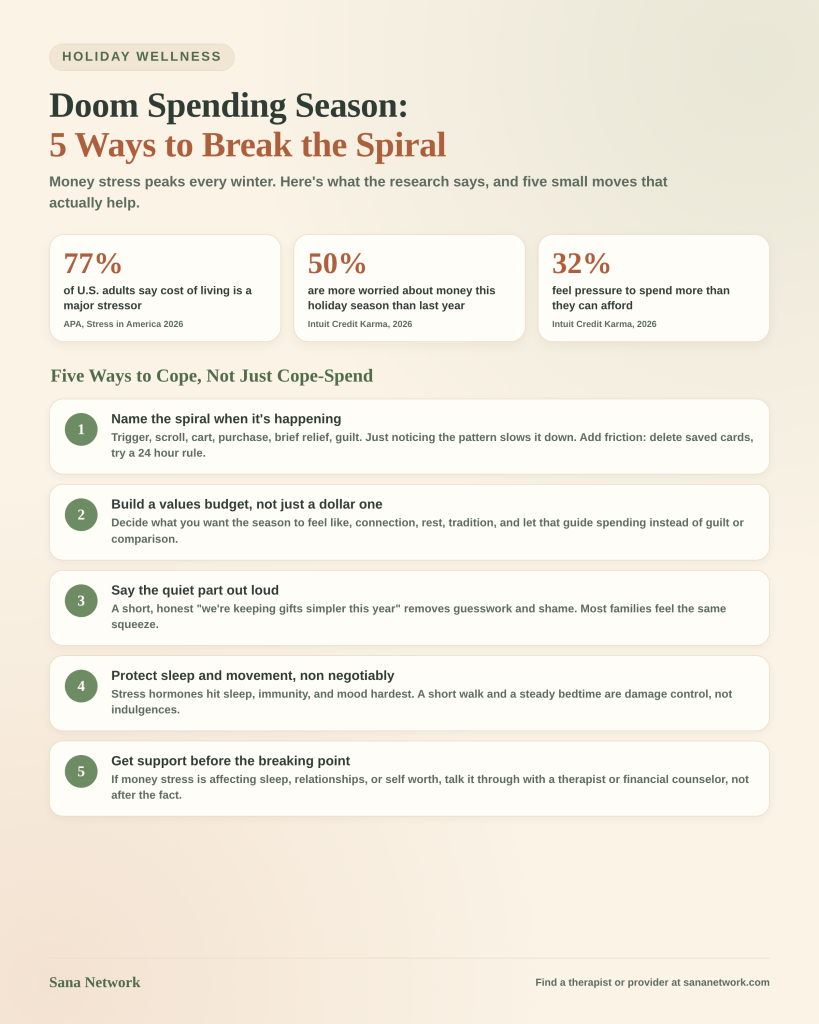
- 77% of adults say the cost of living, rent, groceries, child care, is a significant source of stress, the single most cited stressor in the whole survey.
- 71% say money itself is a significant stressor, up from 63% just three years ago.
- 59% feel like they’re doing everything right but still falling behind.
- 47% have pulled back from social activities because of stress, skipping dinners, trips, and get-togethers.
Here’s the part that caught my attention as a psychologist: the APA noted that stress has become so constant for so many people that it’s starting to feel normal. But, and this is the fine print everyone misses, “becoming used to chronic stress does not mean people are coping with it in a healthy way.” Normal is not the same as okay.
Layer the holidays on top of that and the pressure compounds. A separate survey from Intuit Credit Karma, fielded in late September 2026, found that half of Americans are more worried about money this holiday season than last year, and 32% feel pressure to spend more than they can actually afford (roughly 43 to 44% among Gen Z and millennials). About a third are carrying credit card debt into the season before a single gift gets wrapped, and over a third plan to skip some traditions because of cost.
So when you feel that tight, anxious hum every time a holiday ad pops up, that’s not a personal failing. That’s a documented, national pattern.
The Human Connection
Here’s where it gets a little ironic. Doom spending is, at its core, an attempt to fix an uncomfortable feeling. Stress spikes, the brain wants relief, and a purchase delivers a quick hit of control and comfort. The problem is that relief is short lived, and the bill (literal and emotional) comes right behind it. You feel calmer for an hour, then more anxious once the statement lands, which can trigger another round of spending to cope with that stress. It’s a loop, not a solution.
This isn’t just a “money thing” either. Chronic stress has real effects on your body. The National Institutes of Health links ongoing stress to inflammation (tied to cardiovascular disease, diabetes, and arthritis), a weakened immune response, disrupted sleep, digestive issues, and changes in how your body stores fat after meals. Add in holiday schedules, family dynamics, less sleep, and richer food, and you’ve got a perfect storm for feeling physically worse right when you’re supposed to be celebrating.
There’s also a relational layer that matters in my work with families: gift giving often stands in for love and belonging. When money is tight, people don’t just worry about their wallet, they worry about disappointing someone, or about what their spending says about them as a partner or parent. That emotional weight is exactly why this topic deserves more than a budgeting app and a shrug.
Actionable Advice
You can’t personally fix inflation or the economy. You can change how you move through the next six weeks. A few places to start:
- Name the spiral when it’s happening. Doom spending follows a pattern: stressful trigger, scroll, cart, purchase, brief relief, guilt. Just noticing “I’m doing the thing” in the moment often slows it down. Add friction where you can, delete saved card info, log out of shopping apps, or set a firm 24 hour rule before buying anything that isn’t a true necessity.
- Build a values budget, not just a dollar budget. Decide what you actually want this season to feel like (connection, rest, tradition) and let that guide the spending, instead of guilt or comparison. A smaller, intentional gift tied to something real usually lands better than an expensive one bought in a panic.
- Say the quiet part out loud. A short, honest conversation with loved ones (“we’re keeping gifts simpler this year”) removes the guesswork and the shame. Most families are relieved when someone says it first, since odds are good they’re feeling the same squeeze.
- Protect your sleep and movement like they’re non negotiable. Given how directly stress hormones affect sleep, immunity, and mood, a short walk and a consistent bedtime are damage control for your nervous system, not indulgences.
- Get support before the breaking point. If money stress is affecting your sleep, your relationships, or your sense of self worth, that’s worth talking through with a professional, whether that’s a therapist, a financial counselor, or both.
A Gentle Reminder
If this season already feels heavier than it should, you don’t have to carry it alone, or wait until things feel like a crisis to ask for help. The Sana Network directory connects you with therapists, counselors, naturopaths, and other private practice providers who understand how tangled money stress, family pressure, and mental health get this time of year. Sometimes the most useful gift you can give yourself is one conversation with the right professional.
Written by AI & Reviewed by Clinical Psychologist: Yoendry Torres, Psy.D.
Disclaimer: Some blog posts may contain affiliate links, earning Sana Network a commission at no additional cost to you. These recommendations reflect our honest opinions about products or services we find helpful and trustworthy. This content is informational and not legal nor medical advice; consult an attorney or healthcare provider for personalized guidance.