
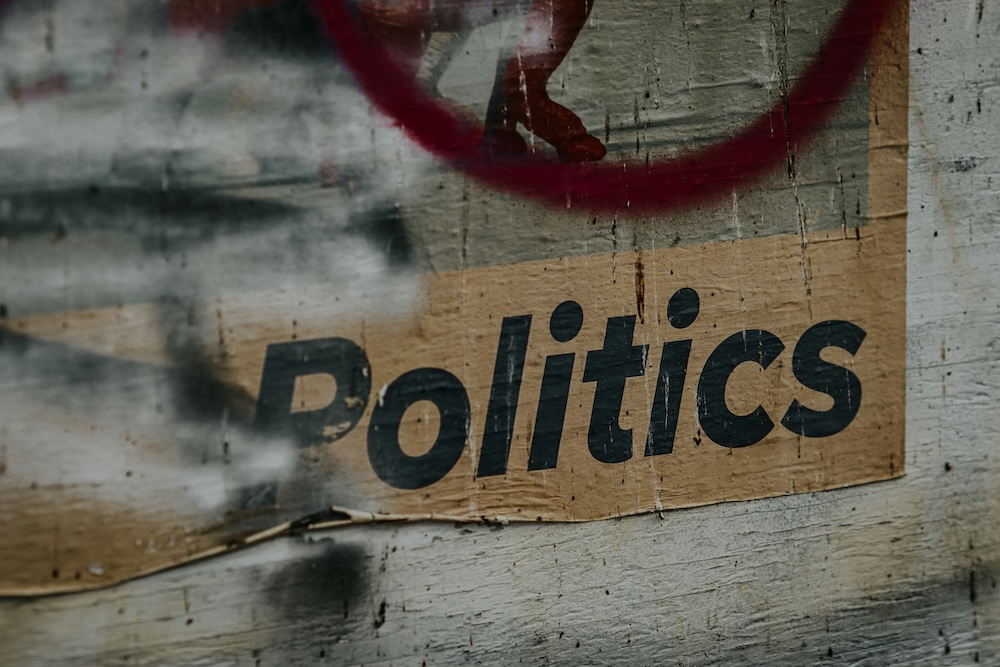
Is Your News Feed Giving You a Heart Rate Spike? Let’s Talk About Political Anxiety
Have you ever found yourself at 11:30 PM, the blue light of your phone illuminating your face, as you search for “what do new tariffs mean for my grocery bill?” […]
Have you ever found yourself at 11:30 PM, the blue light of your phone illuminating your face, as you search for “what do new tariffs mean for my grocery bill?” or “is a recession actually happening?” If you have, welcome to the club. You’re definitely not alone. Over the last few weeks, there’s been a massive surge in what researchers are calling “nervous googling.”
We’ve all been there: you open an app just to check the weather, and forty-five minutes later, you’re deep in a comment section argument about policy shifts, feeling like your chest is tightening and your “to-do” list has been replaced by a “to-worry” list. As a health psychologist, I see this every day. We’re living in a world where the “news” isn’t just something we watch for thirty minutes at dinner; it’s a relentless, 24/7 roommate that refuses to stop talking.
Today, I want to pull back the curtain on why your brain feels like it’s running a marathon while you’re just sitting on the couch. We’re going to break down some brand-new research on Political Anxiety and, more importantly, how you can protect your peace without moving to a cabin in the woods (though that sounds tempting sometimes, doesn’t it?).
The Breakdown: What’s Actually Happening?
For a long time, “political stress” was just a vague term we used to describe why we didn’t want to talk to our uncle at Thanksgiving. But as of May 2026, the scientific community is making it official. A groundbreaking study recently published by Professor Weinschenk in Social Science Quarterly (released just this week, May 11th!) has finally categorized Political Anxiety as a unique form of psychological distress.
The “Fine Print” of the Study
The research highlights that political anxiety isn’t just “regular” anxiety with a different name. It’s distinct because it is responsive to the environment. Here is the breakdown:
- It’s Not Just “In Your Head”: The study developed a specific index to measure how things like polarization and political incivility affect our nervous systems.
- The Survival Mechanism: When you see a headline about a policy change that might affect your healthcare or your wallet, your brain doesn’t see “policy.” It sees a threat.
- The Cortisol Loop: Your body releases stress hormones (like cortisol) to help you “fight or flee.” But since you can’t fight a tariff or flee an election cycle, that energy just sits in your body, leading to those 3 AM ceiling-staring sessions.
Essentially, the “news” has figured out how to hijack our biological alarm systems. The more polarized the environment, the more “threats” our brains perceive, leading to a state of chronic hyper-vigilance.
The Human Connection: Why It Hurts So Much
It’s easy to look at data, but the psychological impact is deeply personal. I’ve noticed a major theme in community forums lately: Helplessness.
People aren’t just worried; they feel powerless. This “powerlessness” is a major trigger for depression and burnout. When the things stressing you out are happening in a capital city hundreds of miles away, or in a boardroom you’ll never enter, your brain enters a state of “learned helplessness.”
Image from Shutterstock
Think of it like this: your Circle of Concern (everything you worry about) has grown to the size of the planet thanks to the internet. But your Circle of Influence (everything you can actually change) feels like it’s shrinking. That gap between what we care about and what we can control is where anxiety lives.
This doesn’t just affect your mood; it hits your wallet and your relationships. Economic anxiety, the fear of how political shifts affect the cost of living, creates a secondary layer of stress that makes us shorter with our partners and more distracted at work. We’re not just “stressed about politics”; we’re stressed about our survival and our community’s future.
Actionable Advice: Taking Your Power Back
You don’t have to be a victim of the news cycle. Here are five practical, “friend-to-friend” tips to help you lower the volume on the world’s noise:
1. The 15-Minute “News Diet”
Instead of “grazing” on news all day, treat it like a meal. Set a timer for 15 minutes in the morning or afternoon. Get your updates from a reliable, neutral source, and when the timer dings, close the tab. Avoid news for at least two hours before bed—your sleep is more important than the latest “breaking” update that will likely change by morning anyway.
2. The 5-4-3-2-1 Grounding Method
When you feel a panic spike after reading a headline, use this sensory technique to come back to the present:
- Acknowledge 5 things you see.
- Acknowledge 4 things you can touch.
- Acknowledge 3 things you hear.
- Acknowledge 2 things you can smell.
- Acknowledge 1 thing you can taste. It sounds simple, but it forces your brain to switch from “future-threat” mode to “present-safety” mode.
3. Move from Agitation to Action
Anxiety is energy with nowhere to go. If a specific issue is keeping you up, find a local way to help. Volunteering at a neighborhood food bank or joining a local community board shrinks your world back down to your “Circle of Influence.” Taking one small, tangible action is the best antidote to helplessness.
4. Curate Your Digital “Neighborhood”
You wouldn’t hang out in a room where people are screaming 24/7, so don’t do it on your phone. Mute keywords on social media that trigger your “nervous googling.” If an account only posts “rage-bait” or “click-bait,” unfollow them.You’re not being uninformed; you’re being protective of your mental real estate.
5. Find Your “Joy Buffer”
What is the one thing that makes you forget your phone exists? Whether it’s gardening, playing with your dog, or a hobby that requires your hands (like cooking or woodworking), lean into it. We need “joy buffers” to replenish the emotional energy that the news cycle drains.
You Don’t Have to Navigate This Alone
Look, I know it feels like the weight of the world is on your shoulders right now, but you don’t have to carry it by yourself. Sometimes, the best “actionable advice” is simply admitting that you need a professional to help you sort through the noise.
If your political anxiety is starting to feel like a permanent resident in your mind, affecting your sleep, your health, or your happiness, it might be time to talk to someone who can help you build a personalized toolkit for resilience.
I highly recommend checking out the Sana Network directory. It’s a fantastic resource for finding therapists and medical providers who understand the unique stresses of our modern world. Whether you need help managing the physiological symptoms of stress or just want a safe space to vent about the state of the world, there’s a professional there ready to support your wellness journey.
Take a deep breath. You’ve got this.
How have you been managing the “nervous googling” lately?
Photo by Jon Tyson on Unsplash
Written by AI & Reviewed by Clinical Psychologist: Yoendry Torres, Psy.D.
Disclaimer: Some blog posts may contain affiliate links, earning Sana Network a commission at no additional cost to you. These recommendations reflect our honest opinions about products or services we find helpful and trustworthy. This content is informational and not legal nor medical advice; consult a an attorney or healthcare provider for personalized guidance.