
The ADHD Medication Shortage Isn’t Over. Here’s How to Stop Panicking About It.
Picture this: it’s the last Tuesday of the month, your kid has three pills left, and you’re sitting in a parking lot calling every drugstore within 40 miles like you’re […]
Picture this: it’s the last Tuesday of the month, your kid has three pills left, and you’re sitting in a parking lot calling every drugstore within 40 miles like you’re trying to win concert tickets. Not a hypothetical. It’s almost word for word a post that landed on an ADHD support forum this year, from someone on Adderall for eight years who, for the first time, couldn’t find it anywhere, not even near their parents in a small town. They weren’t looking for advice. They said flat out they were just venting because they were exhausted.
If that sounds familiar, you’re not alone, and you’re not imagining it. The ADHD medication shortage that started back in 2022 never quietly resolved. It eased up, then came roaring back. Let’s talk about why, and what you can actually do about it this week.
The Breakdown
Here’s the part that trips people up: this shortage has had a good news chapter and a bad news chapter, and a lot of the “just wait, it’s getting better” advice is based on the good news chapter only.
The good news (early 2026): The DEA, which sets a yearly production limit (a “quota”) for controlled substances like stimulants, actually raised those limits. In fall 2025, the quota for lisdexamfetamine (Vyvanse) rose 22%, and d-amphetamine (the active ingredient in Adderall) rose almost 25%, its first increase since 2021. Methylphenidate (Ritalin, Concerta) got about a 9% bump. For a few months, lower doses got noticeably easier to find.
The fine print nobody mentions: A bigger federal quota does not automatically mean more pills on your pharmacy’s shelf. By summer 2026, several major generic manufacturers again reported limited or no availability, due to ingredient sourcing problems, production bottlenecks, and climbing demand. The FDA has listed Adderall IR on its official drug shortage database continuously since October 2022, and it’s still there.
What’s actually hardest to find right now:
- 20 mg and 30 mg immediate-release tablets (the most commonly prescribed strengths)
- 15 to 30 mg extended-release capsules
- 5 mg and 10 mg doses have generally been easier to come by, though even those run spotty in some cities
Manufacturers keep floating “should be resolved by” dates, and those dates keep slipping. The honest answer right now is that there’s no confirmed end date, so planning your family’s life around “it’ll be fixed next month” sets you up for another bad surprise.
One more thing worth knowing: part of why this keeps happening is that ADHD diagnoses, and prescriptions, have climbed fast. DEA-commissioned data found ADHD medication prescriptions rose about 60% between 2012 and 2023. Supply hasn’t kept pace, and quotas are set using the previous year’s sales data, which lags behind what people actually need right now.
The Human Connection
This is where my psychologist hat goes on, because the medication piece is only half the story.
When a kid (or an adult) goes even a few days without their regular ADHD medication, it’s not just “harder to focus.” It can mean falling behind on schoolwork, more conflict at home over homework and chores, trouble managing big emotions, and for adults, real consequences at work. Parents describe a specific kind of exhaustion that comes from having to be the household’s supply chain manager on top of everything else they’re already doing.
There’s also a quieter layer: shame. Calling pharmacy after pharmacy, being told stock info “can’t be given over the phone,” or being asked to just try again tomorrow can leave people feeling like a burden or like they’re doing something wrong. You’re not. You’re navigating a supply problem, not a personal failure.
And financially, this stings. Some families report insurance refusing to cover brand-name alternatives during the shortage, leaving them paying out of pocket for medication that used to be a simple copay. That’s a real stressor layered on top of an already stressful one.
Actionable Advice
You can’t fix a national supply chain from your kitchen table, but you can make this dramatically less chaotic for your family. A few things that genuinely help:
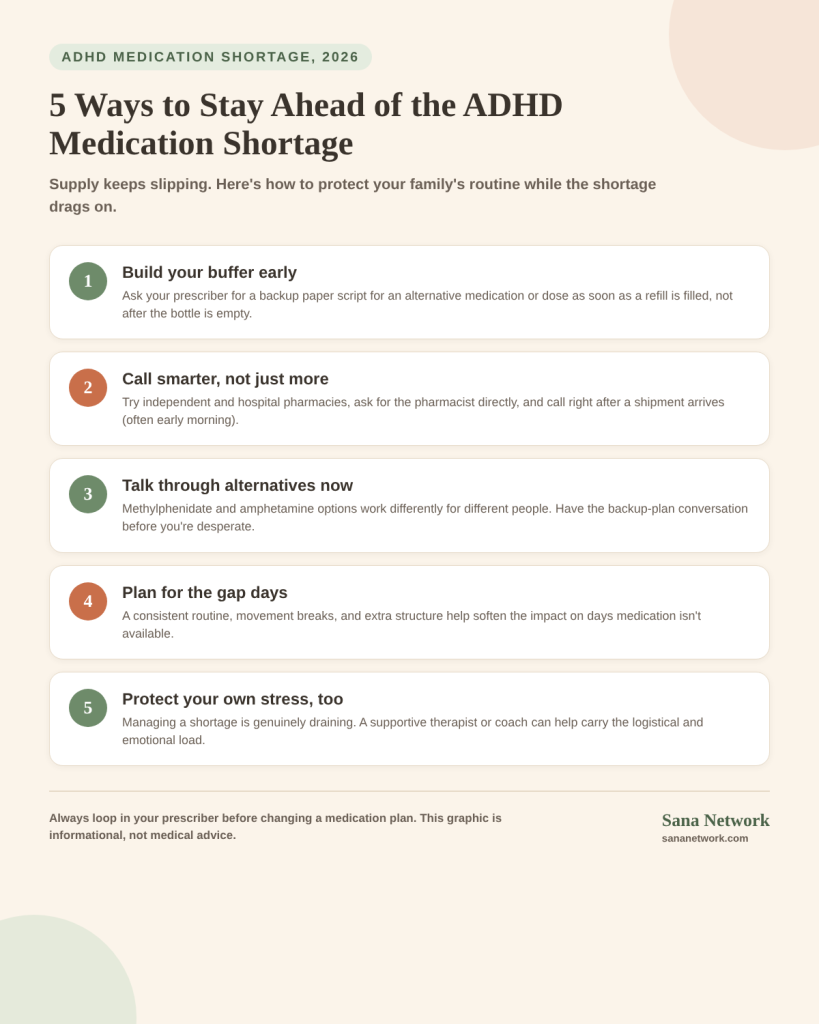
- Build your buffer early, not on day one of the bottle running out. As soon as a prescription is filled, ask your prescriber for a backup paper script for an alternative medication or dose that you can take to a different pharmacy if your regular one is out. Scrambling with zero pills left is the worst time to problem solve.
- Call smarter, not just more. Independent and hospital-affiliated pharmacies often carry different stock than big chains. Ask for the pharmacist directly rather than the front desk, and call right after a shipment arrives (often early morning) instead of at random.
- Ask your prescriber about a short-term alternative, not just the same drug elsewhere. Methylphenidate options (Concerta) and amphetamine options (Adderall, Vyvanse) work differently for different people, but many patients do fine switching temporarily. Have this conversation before you’re desperate, not during.
- Loop in non-medication support for the gap days. A consistent routine, movement breaks, and extra structure at school or home can soften the impact when medication isn’t available. A therapist who specializes in ADHD can help build this toolkit before you need it.
- Protect your own stress levels, too. Managing a medication shortage is genuinely draining. Give yourself permission to not have this perfectly solved, and don’t underestimate how much a supportive therapist or coach can help carry that load.
If you’re navigating this right now, whether it’s your own ADHD or your child’s, you don’t have to figure it out solo. The Sana Network directory can help you find a therapist, psychiatrist, naturopathic provider, or coach in your area who understands ADHD and can help with both the medication maze and the stress that comes with it. Sometimes the most useful next step isn’t a new pharmacy to call, it’s a provider who can help you build a plan that doesn’t depend on any one pharmacy at all.
Written by AI & Reviewed by Clinical Psychologist: Yoendry Torres, Psy.D.
Disclaimer: Some blog posts may contain affiliate links, earning Sana Network a commission at no additional cost to you. These recommendations reflect our honest opinions about products or services we find helpful and trustworthy. This content is informational and not legal nor medical advice; consult an attorney or healthcare provider for personalized guidance.