
Why Everyone’s Suddenly Talking About Measles Again (And What To Actually Do About It)
A new mom posted in a parenting forum recently, asking if she was being “too protective” for not wanting her mother in law to visit her 5 month old baby. […]
A new mom posted in a parenting forum recently, asking if she was being “too protective” for not wanting her mother in law to visit her 5 month old baby. The grandmother is fully vaccinated and just wants to meet the baby, but she lives near an active measles outbreak. The new mom felt guilty for even bringing it up. Hundreds of strangers told her she wasn’t overreacting at all, she was just being a parent in 2026.
If some version of that scene has played out in your house or your group chat lately, you’re far from alone. This year has turned into the worst year for measles in the US in 35 years, and a lot of us are quietly recalculating what “normal” looks like for playdates, daycare drop off, and family visits.
The Breakdown
Here’s what’s actually going on, in plain English.
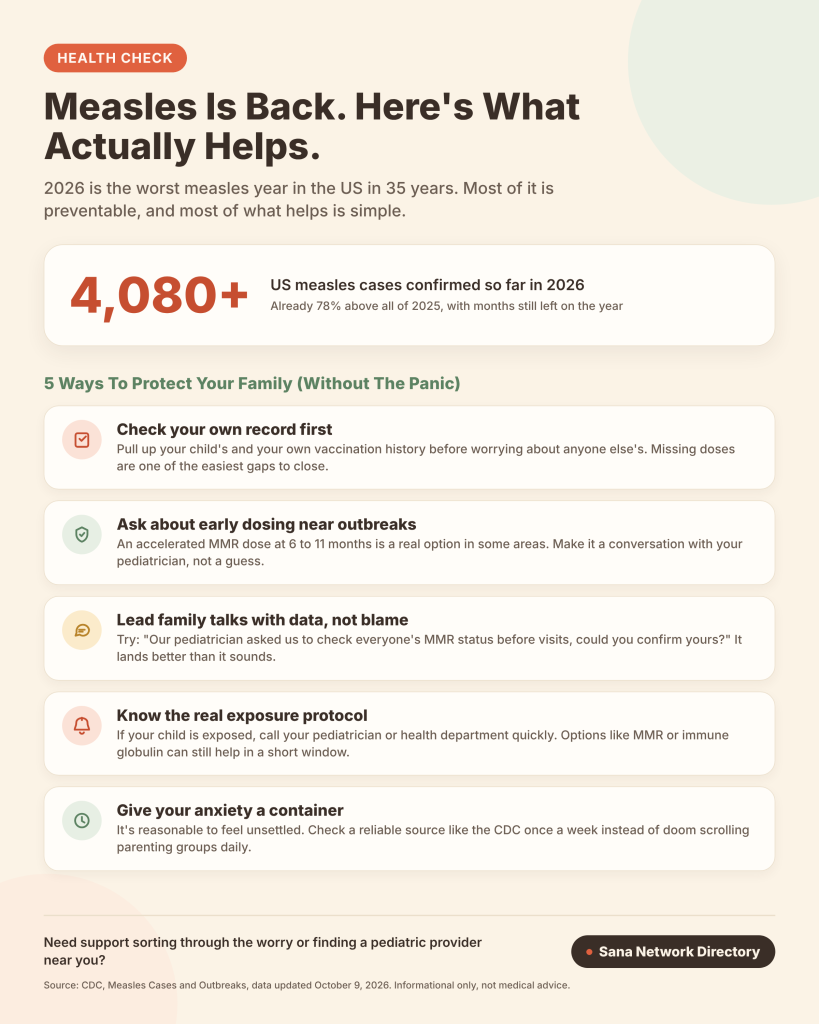
The numbers are genuinely striking. As of early October 2026, the CDC had confirmed more than 4,080 measles cases across 47 states and jurisdictions this year, about 78% higher than all of 2025 combined, with nearly three months still left on the calendar. One single week back in January brought 279 new cases, more than the full year total in all but five years since the country first eliminated measles in 2000.
Most of this is preventable, which is the frustrating part. About 95% of this year’s cases are in people who are unvaccinated or whose status is unknown. One dose of the MMR vaccine is roughly 93 to 95% effective, and two doses push that number to 97 to 99%.
The fine print people keep missing: kindergarten vaccination rates have slipped. National MMR coverage among kindergartners dropped from about 95% before the pandemic to 92.4% in the 2025 to 2026 school year, below the 95% threshold experts say is needed for herd immunity. That gap isn’t spread evenly, some states sit in the high 80s while others are near 98%, which helps explain why outbreaks have landed so unevenly.
There’s also a bigger headline hiding underneath the smaller ones. Because the US has had sustained, ongoing transmission for more than a year now, public health experts say the country is genuinely at risk of losing the measles elimination status it earned back in 2000, a status that reflects whether the virus circulates here on its own versus just occasionally arriving with a traveler.
The Human Connection
Here’s where the headlines turn into something you actually feel in your chest.
If you have a baby under 12 months, you’re living with a real and uncomfortable gap: too young for the MMR vaccine (routine timing is 12 to 15 months), but not too young to catch measles. Parents in online forums describe limiting outings, stressing about daycare and air travel, and even getting their own antibody levels checked so they can pass along protection through breastfeeding. That’s a specific, grinding kind of anxiety, the sense that the “safe window” of early parenthood suddenly comes with an asterisk.
Then there’s the family tension nobody warns you about. Asking a grandparent, sibling, or in law whether they’re current on their vaccines before a visit can feel like an accusation, even when it isn’t one. Parents online describe feeling guilty just for asking, right up until a whole comment section reassures them that protecting a newborn isn’t an overreaction, it’s the job.
Layered under all of it is a quieter, everyday stress: the missed work for an extra pediatrician visit, the mental math of whether a trip is worth it, and the energy it takes to field a well meaning relative’s “but I read that vitamin A works just as well” text. For the record, vitamin A has a narrow, supportive role in treating measles in specific medical situations, something doctors have had to clarify loudly this year. It is not a substitute for vaccination.
Actionable Advice
You can’t control a national vaccination rate, but you can control your own household’s plan.
- Check your own record first. Pull up your child’s (and your own) vaccination history before worrying about anyone else’s. If a kindergarten age kid is missing a dose, most pediatricians can get you in quickly, this is one of the easiest gaps to close.
- Ask about early dosing if you have an infant in an outbreak area. An accelerated MMR dose at 6 to 11 months is a real option in some situations, but it’s a conversation for your specific area and doctor, not a decision to make from a forum post.
- Make the family conversation about data, not accusation. Something like, “Our pediatrician asked us to check everyone’s MMR status before visits, could you confirm yours?” lands better than it sounds when you’re rehearsing it in your head.
- Know the real exposure protocol, not just the fear of it. If your child is exposed, call your pediatrician or health department quickly, options like the MMR vaccine or immune globulin can sometimes still help within a short window after exposure.
- Give your anxiety a container. It’s reasonable to feel unsettled by these numbers. It’s also fine to set a boundary with the news, check a reliable source like the CDC once a week rather than doom scrolling local parenting groups daily.
This is a genuinely stressful season for a lot of families, and that stress is valid even when the medical steps are fairly simple. If the worry sticks around longer than feels useful, or family disagreements over this topic are wearing on you, a therapist or family counselor can help you sort through what’s actually yours to manage. The Sana Network directory is a solid place to start looking for a therapist, pediatric provider, or naturopathic family medicine practitioner near you who can help your whole household feel a little steadier, measles season or not.
Sources
- CDC, Measles Cases and Outbreaks, data updated October 9, 2026
- ABC News: US surpasses 4,000 measles cases with infections confirmed in 45 states (CDC)
- Contagion Live: Measles Update, October 9, 2026, citing CDC and state health department data
- ParentData (Emily Oster, PhD): What’s going on with measles?, citing CDC weekly case data and kindergarten MMR coverage statistics
- NPR/WHRO: RFK’s vitamin A recommendation for measles worries disease experts
Written by AI & Reviewed by Clinical Psychologist: Yoendry Torres, Psy.D.
Disclaimer: Some blog posts may contain affiliate links, earning Sana Network a commission at no additional cost to you. These recommendations reflect our honest opinions about products or services we find helpful and trustworthy. This content is informational and not legal nor medical advice; consult an attorney or healthcare provider for personalized guidance.